This article provides a detailed technical examination of the Industrial Communication Gateway, exploring its role in bridging disparate protocols, enabling edge-to-cloud connectivity, and ensuring reliable data exchange in automation environments. The discussion covers protocol conversion architectures, hardware platforms, security considerations, and deployment scenarios across manufacturing and process industries.
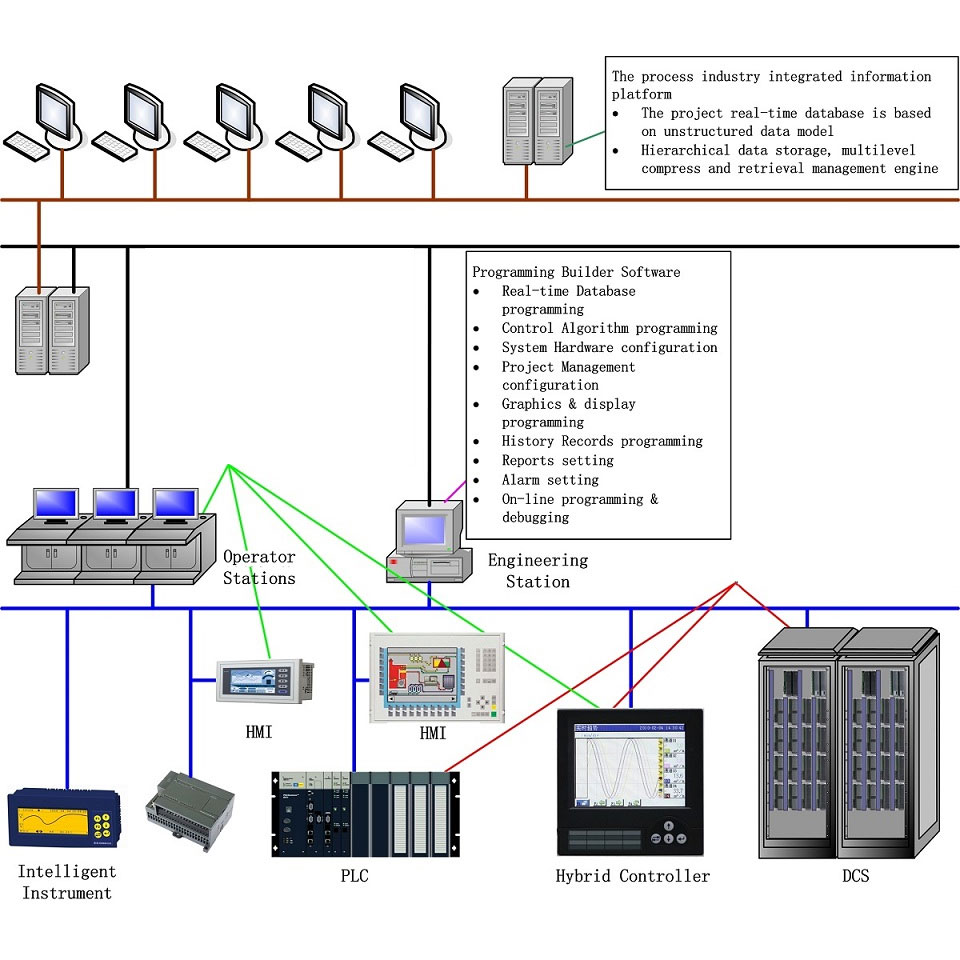
This article provides a detailed examination of Programming Builder Software in the context of industrial automation and control engineering. The discussion covers the integrated development environment (IDE) architecture, programming language support, and the functional layers that define modern control system development. Drawing on established platforms and industry practices, this analysis offers a comprehensive overview of how builder software facilitates engineering design and application deployment.
Communication modules have become the backbone of modern industrial automation and IoT systems. Businesses increasingly face challenges in maintaining seamless connectivity, ensuring data security, and integrating devices across diverse platforms. This article explores how communication modules solve these problems, improve efficiency, and future-proof industrial networks.
In modern industrial automation, precision and reliability are non-negotiable. An Analog Output Module plays a critical role in converting digital control signals into real-world physical actions. This article explores how analog output modules function, their benefits, key selection criteria, and how they address common operational pain points. Whether you are optimizing a PLC-based system or upgrading your process control architecture, understanding these modules is essential for achieving consistent and efficient performance.
Modern industrial automation systems require reliable, flexible, and scalable control components. One key device used in PLC-based automation systems is the 8-Channel Digital Source Output Module. This module allows controllers to send digital signals to multiple devices simultaneously, improving operational efficiency and enabling precise control across manufacturing, processing, and monitoring environments.
In today's fast-paced industrial environment, efficiency, reliability, and automation are no longer optional—they are essential. A Distributed Control System (DCS) offers the solution, enabling industries to manage complex processes with precision and minimal risk. Companies like Shandong Youwen Automation Engineering Co., Ltd. have been providing advanced DCS solutions that help businesses optimize operations, reduce downtime, and ensure safety compliance.
We use cookies to offer you a better browsing experience, analyze site traffic and personalize content. By using this site, you agree to our use of cookies. Privacy Policy

 16 2026-09
  28 2026-08
  21 2026-05
  10 2026-04
  13 2026-03
  29 2026-01

