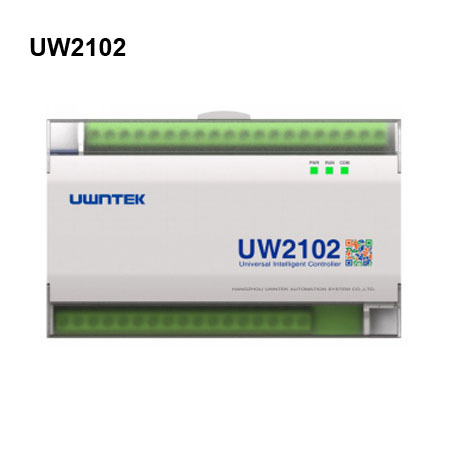
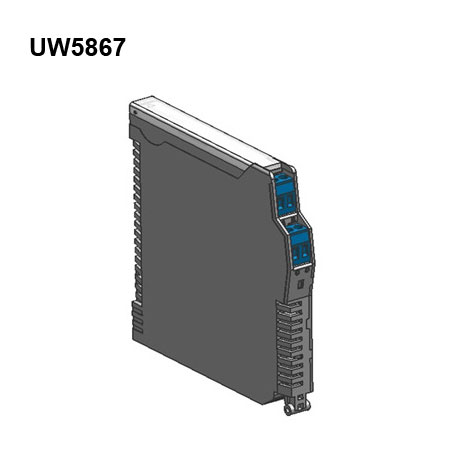
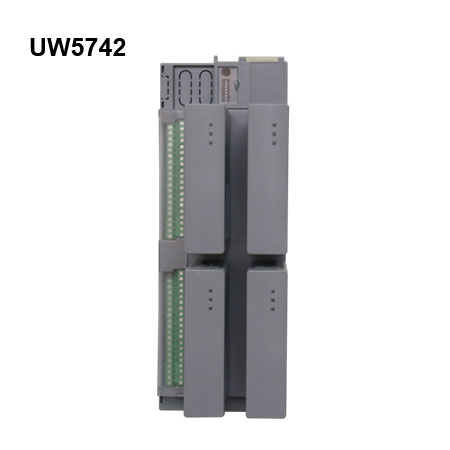
In today's highly automated industrial environment, efficiency, precision, and reliability are no longer optional—they are essential. A Control Module serves as the core decision-making unit within automation systems, enabling machines and processes to operate smoothly, safely, and intelligently. From manufacturing lines and energy systems to building automation and transportation, Control Modules play a critical role in coordinating inputs, executing logic, and controlling outputs with high accuracy.
This article provides a professional, in-depth overview of Control Modules, focusing on functionality, technical parameters, application value, and selection guidance. It is written to match local reading habits, using clear language while maintaining technical rigor.

A Control Module is an electronic or programmable unit designed to monitor signals, process data, and control equipment based on predefined logic or algorithms. It typically acts as the "brain" of an automation system.
Core functions include:
Collecting data from sensors (temperature, pressure, position, voltage)
Processing logic through embedded firmware or programmable software
Sending control signals to actuators, motors, valves, or relays
Communicating with other systems via industrial protocols
Ensuring system safety through diagnostics and fault handling
By centralizing control logic, a Control Module reduces system complexity while improving operational consistency.
A Control Module operates through a closed-loop control process:
Input Acquisition – Receives analog or digital signals from field devices
Signal Processing – Converts and filters data for internal computation
Logic Execution – Applies programmed rules or algorithms
Output Control – Sends commands to controlled equipment
Feedback & Diagnostics – Monitors performance and detects faults
This workflow enables real-time response and adaptive control, which is essential in environments where precision and safety are critical.
Automation systems depend on stable and predictable control. A high-quality Control Module ensures:
Consistent process execution under varying conditions
Reduced downtime through built-in diagnostics
Improved safety with alarm and protection mechanisms
Scalability, allowing systems to grow without redesign
Without a reliable Control Module, even advanced machinery cannot achieve optimal performance.
Understanding technical specifications is essential when evaluating a Control Module. Below is a simplified overview of typical product parameters offered by Shandong Youwen Automation Engineering Co., Ltd.:
| Parameter Category | Specification Description |
|---|---|
| Power Supply | 24V DC (±10% tolerance) |
| Input Types | Digital (DI), Analog (AI: 0–10V / 4–20mA) |
| Output Types | Digital (DO), Analog (AO) |
| Communication | Modbus RTU/TCP, CAN, Ethernet |
| Processing Speed | High-speed industrial-grade CPU |
| Operating Temperature | -20°C to +60°C |
| Protection Level | IP20 / IP65 (optional) |
| Mounting Method | DIN-rail or panel mount |
These parameters are designed to meet the demands of harsh industrial environments while maintaining flexibility for different applications.
Control Modules are widely used across multiple sectors, including:
Manufacturing Automation – Assembly lines, CNC machines, robotics
Energy & Power Systems – Substations, renewable energy control
Building Automation – HVAC, lighting, access control
Water & Wastewater Treatment – Pump stations, filtration systems
Transportation – Signal control, vehicle monitoring
Their adaptability makes them suitable for both centralized and distributed control architectures.
When selecting a Control Module, consider the following factors:
Required input/output quantity and type
Communication protocol compatibility
Environmental conditions (temperature, humidity, vibration)
Processing speed and real-time requirements
Future expansion and maintenance needs
A well-matched Control Module not only improves performance but also reduces long-term operational costs.
What is a Control Module in automation systems?
A Control Module is an electronic control unit that processes input signals, executes control logic, and manages outputs to ensure automated systems operate accurately and safely.
How does a Control Module differ from a controller or PLC?
A Control Module is typically more compact and application-focused, while PLCs are designed for broader, highly programmable control tasks in large systems.
Why is communication capability important for a Control Module?
Communication allows the Control Module to exchange data with HMIs, SCADA systems, and other controllers, enabling monitoring, coordination, and remote diagnostics.
Which factors affect the performance of a Control Module?
Processing speed, input/output accuracy, environmental tolerance, and firmware stability all directly influence Control Module performance.
Shandong Youwen Automation Engineering Co., Ltd. specializes in delivering reliable, high-performance Control Module solutions tailored to industrial automation needs. With a strong focus on quality, compatibility, and long-term stability, our products support efficient system integration and dependable operation across industries.
For detailed specifications, customization options, or technical consultation, please contact Shandong Youwen Automation Engineering Co., Ltd. to discuss how our Control Module solutions can enhance your automation projects.