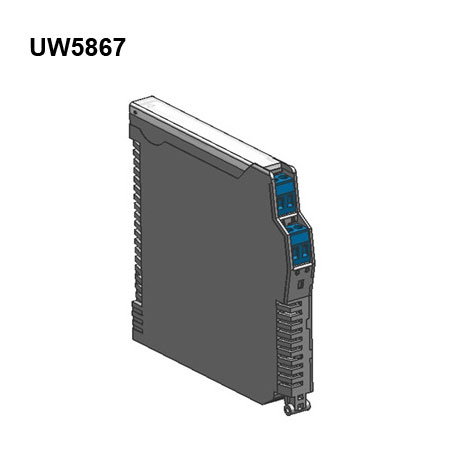
Abstract · This article provides a detailed technical examination of the Control Module, exploring its architecture, signal processing capabilities, and critical role in industrial automation systems. The discussion covers input/output configurations, communication protocols, redundancy features, and the engineering considerations that ensure reliable performance in demanding process environments.
01. Core Architecture and Signal Processing Functions
A Control Module is a central component in industrial automation systems, responsible for acquiring sensor signals, executing control algorithms, and driving actuator outputs. Its architecture is designed to provide deterministic, real-time performance in demanding process environments.
The core of the module typically includes a high-performance microprocessor or microcontroller, dedicated signal conditioning circuits, and a robust communication interface. The signal processing chain begins with analog-to-digital conversion of sensor inputs, followed by digital filtering and scaling. The processed data is then used by the control algorithm to generate output signals, which are converted back to analog or digital form to drive actuators. This closed-loop process must execute reliably within strict time constraints to maintain process stability.
High-performance microprocessor or microcontroller
ADC, digital filtering, DAC
Deterministic real-time performance
02. Input/Output Configurations and Isolation
4-20 mA, 0-10 V, RTD, and thermocouple inputs for process variables
Dry contacts and voltage-level inputs for status monitoring
4-20 mA and 0-10 V outputs for valve and actuator control
Channel-to-channel and field-to-logic isolation for safety and noise immunity
The Control Module is available with a wide range of input/output configurations to suit different process requirements. Analog inputs are typically designed to accept standard industrial signals such as 4-20 mA and 0-10 V, as well as direct temperature sensor inputs. Digital inputs handle status signals from switches, relays, and proximity sensors. Analog and digital outputs drive control valves, motor starters, and other actuators. Galvanic isolation between channels and between field wiring and internal logic is essential for safety and for protecting the module from electrical noise and transients.
Isolation Note: Proper isolation prevents ground loops and protects sensitive electronics from voltage spikes and surges. It is a critical design feature for reliable operation in industrial environments.
03. Communication Protocols and System Integration
Modern control modules are designed to integrate seamlessly into distributed control systems (DCS) and plant-wide networks. The Control Module supports a range of communication protocols to facilitate this integration.
- Modbus RTU/TCP: Widely used industrial protocol for connecting to PLCs, HMIs, and SCADA systems.
- Profibus DP: High-speed fieldbus for connecting to distributed I/O and drives.
- Ethernet/IP: Industrial Ethernet protocol for real-time control and information exchange.
- OPC UA: Platform-independent standard for secure, reliable data exchange in industrial automation.
- Redundant Communication: Some modules support dual communication paths for increased reliability.
The ability to communicate with multiple systems and protocols allows the control module to serve as a central hub for data acquisition and control, integrating field devices with higher-level control and monitoring systems.
04. Redundancy and Fault Tolerance Features
Reliability is a paramount concern in industrial automation. The Control Module incorporates several features to ensure continuous operation even in the event of a fault.
- Hot-Standby Redundancy: Two modules operate in parallel, with one active and one standby. If the active module fails, the standby takes over seamlessly.
- Watchdog Timers: Monitor the execution of the control program and trigger a reset or failover if the program hangs or exceeds time limits.
- Self-Diagnostics: Continuous monitoring of internal hardware and software health, with fault reporting to the control system.
- Power Supply Redundancy: Dual power inputs allow the module to continue operating if one power source fails.
- Fault-Tolerant Communication: Redundant network paths and error-checking protocols ensure data integrity.
05. Environmental Specifications and Reliability
The Control Module is engineered to operate reliably in demanding industrial environments. Its construction and component selection reflect a design philosophy centered on durability and long-term performance.
| Parameter | Specification | Significance |
|---|---|---|
| Operating Temperature | -20°C to +60°C | Suitable for most industrial environments |
| Storage Temperature | -40°C to +85°C | Safe storage and transport |
| Power Supply | 24 VDC | Standard industrial control voltage |
| Power Consumption | < 10 W | Energy efficient, low heat generation |
| Protection Rating | IP20 | Protected against solid objects; requires cabinet mounting |
| MTBF | > 100,000 hours | High reliability and long service life |
Based on specifications from multiple sources.
The module's wide operating temperature range ensures functionality in environments ranging from climate-controlled control rooms to harsh plant floor conditions. The low power consumption reduces thermal load within enclosures, contributing to overall system reliability.
06. Application Domains and Industry Use Cases
The Control Module is used across a broad spectrum of industries, serving as a reliable processing core for diverse control tasks. Its combination of processing capability, communication flexibility, and rugged construction makes it suitable for both discrete and process manufacturing environments.
- Process Control: Used in chemical, pharmaceutical, and food processing plants to regulate temperature, pressure, flow, and other process variables.
- Manufacturing Automation: Controls motors, pumps, conveyors, and robotic systems in automotive, electronics, and general manufacturing.
- Power Generation and Distribution: Monitors and controls equipment in power plants, substations, and renewable energy installations.
- Building Automation: Manages HVAC, lighting, and security systems in commercial and institutional buildings.
- Water and Wastewater Treatment: Controls pump stations, monitoring systems, and treatment processes.
- Oil and Gas: Used in pipeline monitoring, refinery control, and offshore platform systems.
The module's ability to handle both fast discrete logic and complex analog control loops makes it versatile enough for hybrid applications where both types of control are required. Its communication capabilities enable integration into plant-wide automation architectures, facilitating data exchange between the control level and enterprise systems.
Frequently Asked Questions
Product specifications and availability may vary. Always consult the manufacturer's documentation for your specific application requirements.