Abstract · This article provides a detailed technical examination of the Industrial Communication Gateway, exploring its role in bridging disparate protocols, enabling edge-to-cloud connectivity, and ensuring reliable data exchange in automation environments. The discussion covers protocol conversion architectures, hardware platforms, security considerations, and deployment scenarios across manufacturing and process industries.
01. Core Function: Protocol Conversion and Interoperability
An Industrial Communication Gateway serves as a translator and bridge between devices and systems that use different communication protocols. In modern industrial environments, it is common to find equipment from multiple vendors, each speaking its own protocol—Modbus, Profibus, EtherNet/IP, PROFINET, BACnet, or OPC UA, among others.
The gateway receives data in one protocol format, processes it according to configured rules, and transmits it in the protocol required by the target system. This enables seamless data flow between legacy equipment and modern control systems, between OT (operational technology) and IT (information technology) networks, and between the factory floor and cloud-based analytics platforms. Without such gateways, integrating heterogeneous systems would require extensive custom programming or expensive equipment replacements.
Protocol conversion and data routing
Modbus, Profibus, EtherNet/IP, OPC UA
OT/IT convergence, legacy system support
02. Hardware Architectures and Form Factors
Compact units for control cabinet installation; ruggedized for industrial environments
Higher port density and redundancy for control rooms and data centers
Board-level gateways for integration into OEM equipment
Combined communication and computing capabilities for edge analytics
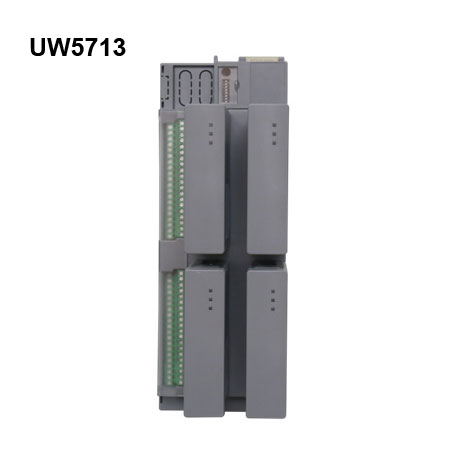
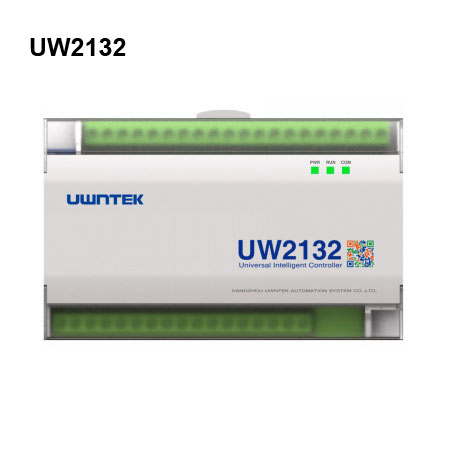
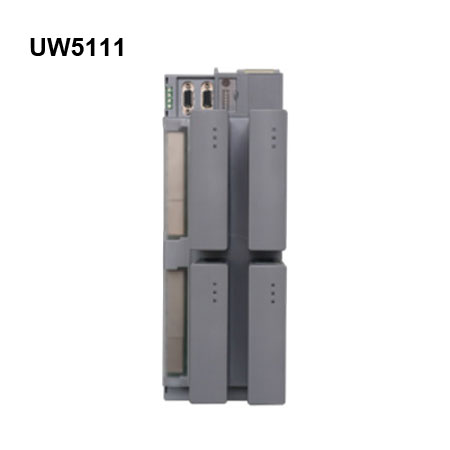
Industrial gateways are available in a range of form factors to suit different installation environments. DIN-rail mounted units are the most common in factory automation, offering a compact footprint and robust construction. Rack-mount gateways are used in control rooms where higher port counts and redundancy are required. Embedded modules are integrated directly into machines and equipment by OEMs, providing built-in connectivity. Edge gateways combine communication functions with local processing power, enabling data filtering, aggregation, and analytics at the source.
03. Supported Protocols and Industrial Standards
The versatility of an Industrial Communication Gateway is determined by the range of protocols it supports. Modern gateways typically handle multiple protocols simultaneously, allowing them to serve as central hubs for data exchange.
| Protocol Category | Common Examples | Typical Application |
|---|---|---|
| Fieldbus | Profibus DP, Modbus RTU, CANopen | Sensor and actuator connectivity |
| Industrial Ethernet | PROFINET, EtherNet/IP, Modbus TCP | Controller and drive communication |
| Building Automation | BACnet, LonWorks, KNX | HVAC, lighting, and energy management |
| IoT and Cloud | MQTT, OPC UA, REST API | Cloud analytics and remote monitoring |
| Legacy Serial | RS-232, RS-485 | Older equipment integration |
Based on typical protocol support in industrial gateway products.
The ability to support multiple protocols simultaneously makes the gateway a central component in modern automation architectures. It can collect data from field devices, translate it for the control system, and simultaneously publish it to a cloud platform for analytics—all within a single device.
04. Edge Computing and Data Preprocessing
Many modern Industrial Communication Gateway devices incorporate edge computing capabilities, enabling them to process data locally before transmitting it to higher-level systems. This reduces network bandwidth requirements and enables faster response times for time-critical applications.
- Data Filtering: Only relevant data is transmitted, reducing network load and cloud storage requirements.
- Aggregation: Data from multiple sources is combined into a single stream, simplifying downstream processing.
- Protocol Normalization: Data is converted into a standard format (such as JSON or OPC UA information models) for easier integration.
- Local Analytics: Basic calculations, threshold monitoring, and anomaly detection can be performed at the edge.
Edge Note: By processing data at the source, edge-enabled gateways reduce latency and enable real-time decision-making without relying on cloud connectivity, which is essential for applications where network reliability cannot be guaranteed.
05. Security Features and Network Isolation
Security is a critical consideration for any Industrial Communication Gateway, as it often sits at the boundary between the operational technology (OT) network and the information technology (IT) network. A security breach at this point could compromise both production systems and enterprise data.
- Network Segmentation: The gateway can isolate the OT network from the IT network, preventing unauthorized access to control systems.
- Firewall Functionality: Built-in firewall rules allow only authorized traffic to pass between networks.
- Encryption: Data transmitted over untrusted networks can be encrypted using TLS/SSL or VPN tunnels.
- Access Control: User authentication and role-based access control prevent unauthorized configuration changes.
- Audit Logging: All access and configuration changes are logged for compliance and forensic analysis.
These security features are essential for protecting industrial control systems from cyber threats while enabling the data connectivity required for modern digitalization initiatives.
06. Deployment Scenarios and Integration Challenges
The Industrial Communication Gateway is deployed in a wide range of scenarios across manufacturing, process industries, and infrastructure. Each deployment presents unique integration challenges that must be addressed.
- Legacy System Integration: Connecting older equipment with serial or proprietary protocols to modern control systems.
- Multi-Vendor Environments: Bridging equipment from different manufacturers that use different protocols.
- Cloud Connectivity: Transmitting production data to cloud platforms for analytics, dashboards, and remote monitoring.
- Building Automation: Integrating HVAC, lighting, and security systems into a unified management platform.
- Energy Management: Collecting data from meters and power monitoring devices for efficiency analysis.
Successful deployment requires careful planning, including network architecture design, protocol mapping, data modeling, and security configuration. The gateway must be configured to handle the specific data rates, message formats, and timing requirements of the connected systems.
Frequently Asked Questions
Technical specifications and protocol support may vary by model. Always consult the manufacturer's documentation for your specific application requirements.