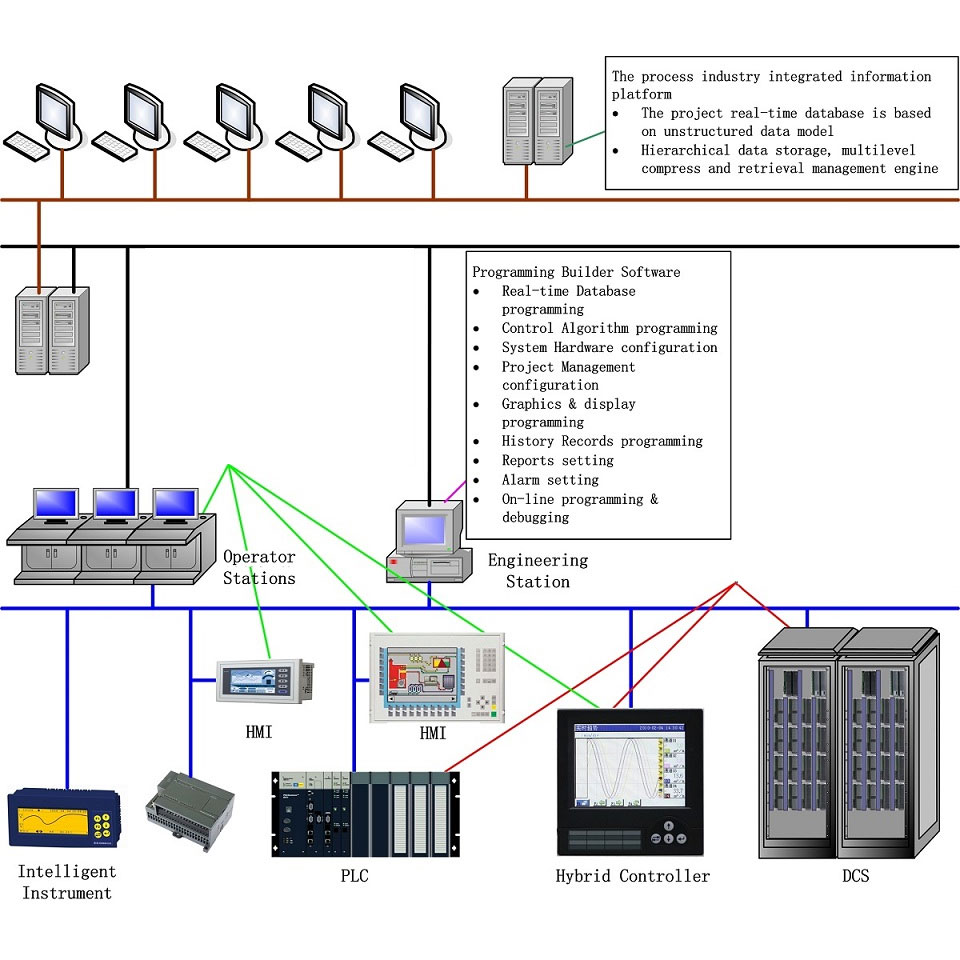
Real-time control software plays an important role in modern industrial automation by coordinating control logic, processing operational data, and connecting engineering systems. This article explores how multi-platform development, real-time databases, industrial algorithm libraries, and remote engineering tools improve control efficiency, system reliability, and maintenance across complex industrial applications. We also examine how UWNTEK approaches these requirements through its control software technologies and engineering experience.
Industrial automation depends on more than programmable controllers and field devices. A production line may contain sensors, actuators, motors, communication networks, operator interfaces, and supervisory systems. These components need to exchange information and respond to changing operating conditions in a coordinated way.
Real-time control software provides the software foundation for this coordination. It processes control instructions, manages data exchange, monitors equipment status, and supports communication between different parts of an automation system. Its main value is not simply executing commands, but ensuring that control logic, operational data, and engineering functions work together consistently.
For example, in a continuous manufacturing process, a temperature sensor may detect a deviation from its configured range. The control system must acquire the signal, evaluate the control logic, update the relevant output, and make the operating information available to the monitoring interface. Delays, missing data, or incorrect signal handling can affect process stability.
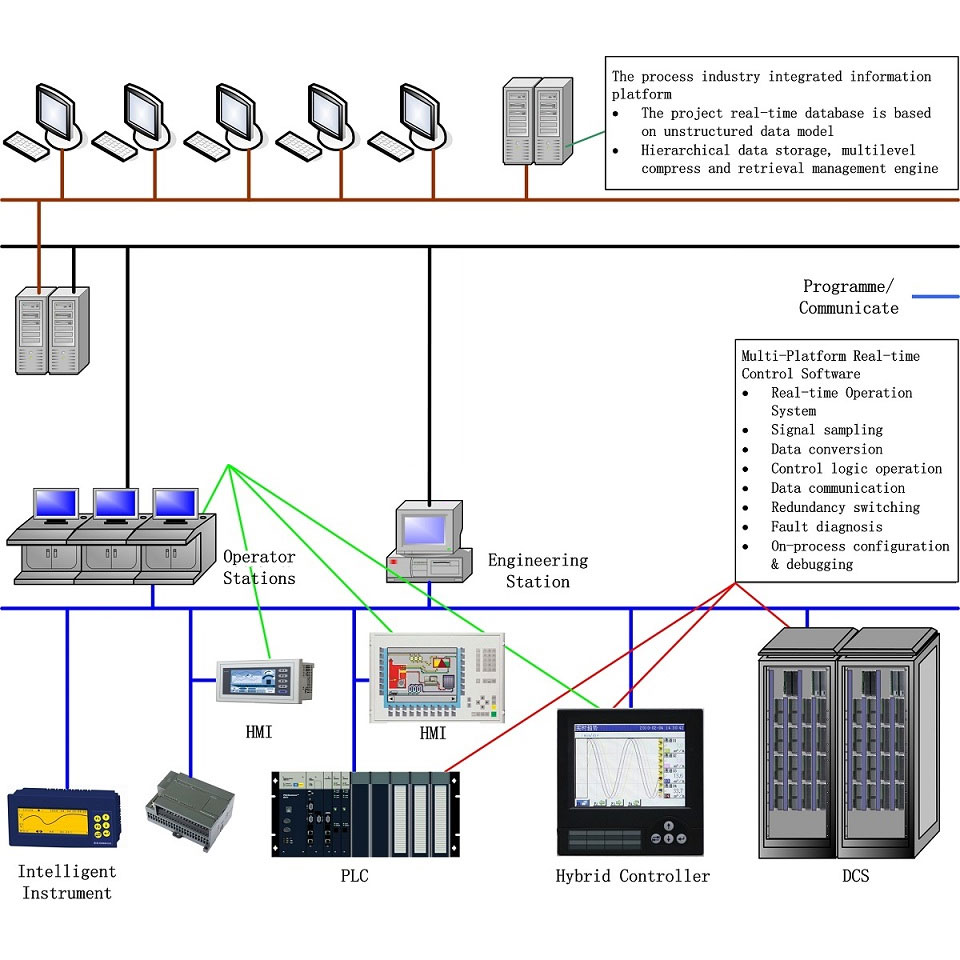
Well-designed real-time control software helps engineers manage these tasks within a unified architecture. Depending on the application, it can support:
For manufacturers operating complex production facilities, these capabilities help reduce fragmented control processes and make system behavior easier to monitor and maintain.
Engineering time is a major consideration in industrial automation projects. When a control system contains hundreds or thousands of engineering objects, programming every function independently can create unnecessary duplication. Changes to one equipment unit may also require updates across several related control programs.
One practical solution is to organize engineering work around reusable objects, standardized functions, and industrial algorithm libraries.
A control engineering platform based on a multi-domain engineering object model allows engineers to define equipment structures and their associated control functions in a more organized way. Instead of repeatedly developing similar logic, teams can reuse tested functional modules and adapt parameters to different applications.
For example, a motor control function may include start and stop commands, running feedback, fault detection, and operating status. Once this function has been properly developed and validated, it can serve as a reusable module for similar equipment across a project.
Industrial algorithm libraries provide another level of efficiency. They preserve engineering knowledge and application experience in reusable software components. Combined with reconfiguration and reuse mechanisms, they can help generate control programs automatically from predefined engineering configurations.
| Engineering Function | Traditional Challenge | Software-Based Improvement |
|---|---|---|
| Control logic development | Repeated programming of similar functions | Reusable industrial algorithm libraries |
| Engineering configuration | Scattered equipment definitions | Multi-domain engineering object models |
| Hardware diagnostics | Time-consuming fault investigation | Resource browsing, monitoring, and channel-level fault location |
| Project collaboration | Sequential programming and repeated coordination | Synchronous multi-person engineering development |
| Project documentation | Manual completion drawing preparation | Automatic generation of project completion drawings |
In large projects, the benefit is particularly noticeable when multiple engineers need to work on different equipment units or functional areas simultaneously. Standardized modules also make later modifications easier to review and maintain.
Control decisions are only as reliable as the data behind them. In an industrial environment, a control platform may need to process signals from distributed sensors, controllers, production equipment, and external information systems. If data is incomplete, delayed, or incorrectly identified, operators and higher-level applications may make decisions based on inaccurate process information.
Real-time data management addresses this challenge through structured acquisition, data quality identification, storage, and access mechanisms.
One important capability is the use of real-time data quality stamps. These identifiers help distinguish valid data from abnormal, unavailable, or otherwise unreliable values. This is useful when communication interruptions, hardware failures, or signal acquisition problems occur. Instead of treating every received value as equally trustworthy, applications can consider its quality status before using it.
Distributed real-time databases also play an important role. They provide a unified interface for accessing system data and external data, allowing different applications to work with consistent information. In larger industrial installations, distributed database architectures can help organize data across multiple control nodes and engineering areas.
UWNTEK's published technical capabilities include cluster-based distributed real-time database technology with a stated data capacity of up to 10 million points, as well as interfaces for MES and ERP systems. This type of architecture is relevant to manufacturing environments where process control data needs to support production management, reporting, and enterprise-level operations.
Typical applications include:
When evaluating a real-time database, engineers should consider more than its stated data-point capacity. Update frequency, communication load, data quality handling, redundancy design, storage strategy, and interface compatibility also affect actual performance.
Industrial control projects rarely use a single programming approach. Different engineering tasks may require function-based logic, sequential process control, structured programming, or instruction-based development. A software platform that supports several programming languages can give engineers more flexibility when designing and maintaining control applications.
Multi-Platform Real-time Control Software brings together development, execution, data management, and engineering functions in a coordinated software environment. In practice, multi-language support is especially useful when a project involves different equipment types, control strategies, or engineering teams.
UWNTEK's technical framework supports a multi-language hybrid programming integrated development environment, including:
| Programming Language | Typical Engineering Application |
|---|---|
| FBD (Function Block Diagram) | Building control logic through interconnected functional blocks |
| LD (Ladder Diagram) | Implementing relay-style logic and equipment interlocks |
| SFC (Sequential Function Chart) | Organizing step-by-step production and machine sequences |
| ST (Structured Text) | Developing structured logic, calculations, and complex conditions |
| IL (Instruction List) | Supporting instruction-oriented programming in compatible environments |
Consider a packaging production line. LD may be suitable for motor interlocks and safety-related operating conditions, while SFC can organize the sequence of feeding, filling, sealing, and discharge operations. ST can handle more complex calculations, and FBD can help engineers organize reusable control functions.
Using different languages within one integrated development environment allows engineering teams to select an appropriate programming method for each task rather than forcing every function into a single format.
Multi-platform access is also important for daily operations. Web-based remote access can make monitoring information available through PCs, iPads, iPhones, Android devices, and other supported smart terminals. Actual availability and functionality depend on system configuration, network conditions, device compatibility, and access permissions.
Modern manufacturing systems often include several layers of automation and information management. Field devices collect process signals, control systems execute operating logic, supervisory platforms provide visualization, and MES or ERP systems manage production and business information.
Without a consistent data interface, these layers can become isolated. Engineers may need to maintain separate communication configurations, duplicate data definitions, or develop additional interfaces for different applications.
A unified real-time data interface helps reduce this fragmentation. Distributed database technology can provide access to system and external data, while industrial communication and integration functions connect control applications with higher-level platforms.
For example, a manufacturing facility may need to share equipment operating status, production counts, process values, and alarm information with its MES platform. The control system handles real-time operational data, while MES uses the information for production scheduling, tracking, and reporting.
The integration architecture should be designed around several practical considerations:
Integration is not simply a matter of connecting more systems. The objective is to make operational information usable across engineering, production, and management functions without compromising control stability.
Industrial automation projects continue to require engineering support after commissioning. Small changes to control logic, equipment configuration, or visualization screens may arise during normal production. If every minor modification requires engineers to travel to the site, maintenance becomes slower and more expensive.
Remote engineering update capabilities can simplify this process by allowing authorized engineering personnel to deliver supported project updates without repeatedly returning to the installation site.
For example, when an operator reports that a monitoring screen needs an adjustment, the engineering team can review the project configuration and prepare an appropriate modification. After testing, approval, and compliance with site procedures, the updated project can be delivered remotely where the system supports this function.
Remote engineering is particularly useful for:
Remote access should never replace proper operational safeguards. Industrial systems need authenticated access, permission management, change records, backup procedures, and a clear rollback plan. Safety-critical modifications should follow the site's formal review and testing process.
Project documentation is equally important. Automatically exporting project completion drawings can provide maintenance teams with updated engineering references, making it easier to identify equipment relationships, review configurations, and troubleshoot issues after commissioning.
UWNTEK, developed under Shandong Youwen Automation Engineering Co., Ltd., was established in 2008 based on the control equipment and control system research team of Zhejiang University. The company specializes in control system research and development, manufacturing, and engineering services. Its headquarters is located in Hangzhou, with its technology center at Zhejiang University.
Rather than focusing on a single software function, UWNTEK has developed a computer control system technology framework covering 11 core technology areas. These include reliability design, data I/O, multi-platform real-time control software, real-time databases, and software platform technologies.
Several capabilities are particularly relevant to industrial automation projects:
For industrial users, the important question is how these functions fit the actual control architecture, equipment requirements, and maintenance workflow. Software selection should therefore involve engineering evaluation, interface verification, application testing, and confirmation of the required hardware and communication environment.
Learn more about UWNTEK's Distributed Control System and Safety Control System technologies to explore its broader industrial control solutions.
Real-time control software is used to process industrial signals, execute control logic, monitor equipment, manage operational data, and coordinate communication between automation components. It is commonly used in manufacturing lines, process industries, and other automated facilities where timely and consistent control responses are important.
Real-time control software generally focuses on control execution, engineering logic, data processing, and system-level coordination. SCADA software primarily focuses on supervisory monitoring, visualization, alarm management, and operator interaction. Their functions can overlap, and both may work together within an industrial automation architecture.
Different control tasks require different programming approaches. FBD is useful for function-based logic, LD for interlocks and relay-style control, SFC for sequential processes, and ST for complex calculations and structured logic. Supporting multiple languages gives engineers more flexibility when developing and maintaining industrial applications.
A distributed real-time database organizes operational data from multiple system nodes and provides a consistent interface for accessing that information. It can support centralized monitoring, production data analysis, and information exchange with MES and ERP platforms. Its suitability depends on data volume, update frequency, network architecture, and system requirements.
Yes. Depending on the platform and system configuration, web-based access can provide monitoring through PCs and mobile devices, while remote engineering update functions can support authorized project modifications. Secure authentication, access permissions, network protection, and change management are essential for safe implementation.
Engineers should evaluate programming language support, hardware compatibility, real-time performance, database capacity, communication interfaces, redundancy and reliability design, diagnostic functions, cybersecurity, scalability, and long-term technical support. A practical test using representative equipment and control scenarios is preferable to relying only on feature lists.
UWNTEK combines engineering object models, reusable industrial algorithm libraries, multi-language programming, distributed real-time database technology, collaborative development, and remote engineering functions. Its published technical specifications include a cluster distributed database capacity of up to 10 million data points, making these capabilities relevant for evaluation in large-scale industrial control applications.
Real-time control software improves industrial automation by connecting control logic, engineering development, operational data, and maintenance functions within a coordinated architecture. Its practical value becomes clearer as production systems grow more complex and require better data consistency, programming efficiency, system integration, and remote engineering support.
For manufacturers planning new automation projects or upgrading existing control infrastructure, the focus should be on software capabilities that solve actual engineering problems rather than simply increasing the number of available functions. With its research background at Zhejiang University and its experience in control system development and engineering services, UWNTEK provides a technical framework worth considering when evaluating Multi-Platform Real-time Control Software for industrial automation applications.